 About Us
 Why K12?
 Safety Needs
 How Students Succeed
 FAQs
FAQs Online Elementary School
 Online Middle School
 Career and College Prep
 Online High School
 Student Clubs
 Career and College Services
 Inside the Online Classroom
 A Day in the Life
 Social & Extracurricular
 Advice, Tips & Inspiration
 Benefits for Life
 Enroll
 All School Options
 Need More Help?
Learning today doesn’t just happen in classrooms. It also streams through screens, often in the form of engaging, educational content. As families turn to digital platforms for academic help, a new era of “edutainment” is transforming how kids study, stay curious, and connect with school subjects.
To better understand this shift, we surveyed more than 1,000 parents and K–12 teachers not affiliated with K12. What we discovered sheds light on how creator-made content is being used to support learning, particularly as students engage with educational videos both in and outside of school.
Key Takeaways
- Students spend 260 hours a year watching educational content on YouTube or other online platforms.
- 73% of parents said their children watch educational videos on YouTube.
- More than one in three parents (37%) reported that their child wants to become an educational YouTuber or TikToker someday.
- 89% of parents said their child’s grades improved thanks to online educational videos.
- About two-thirds of teachers (65%) have incorporated creator-made content, such as YouTube or TikTok videos, into their lessons.
- Over a third of teachers (37%) said they’ve felt pressure to adapt their teaching style to resemble that of a video creator in order to keep students engaged.
Educational Videos Boost Students Engagement
Students aren’t just watching videos for fun anymore. Many are viewing educational content on apps and websites to deepen their understanding of school subjects.
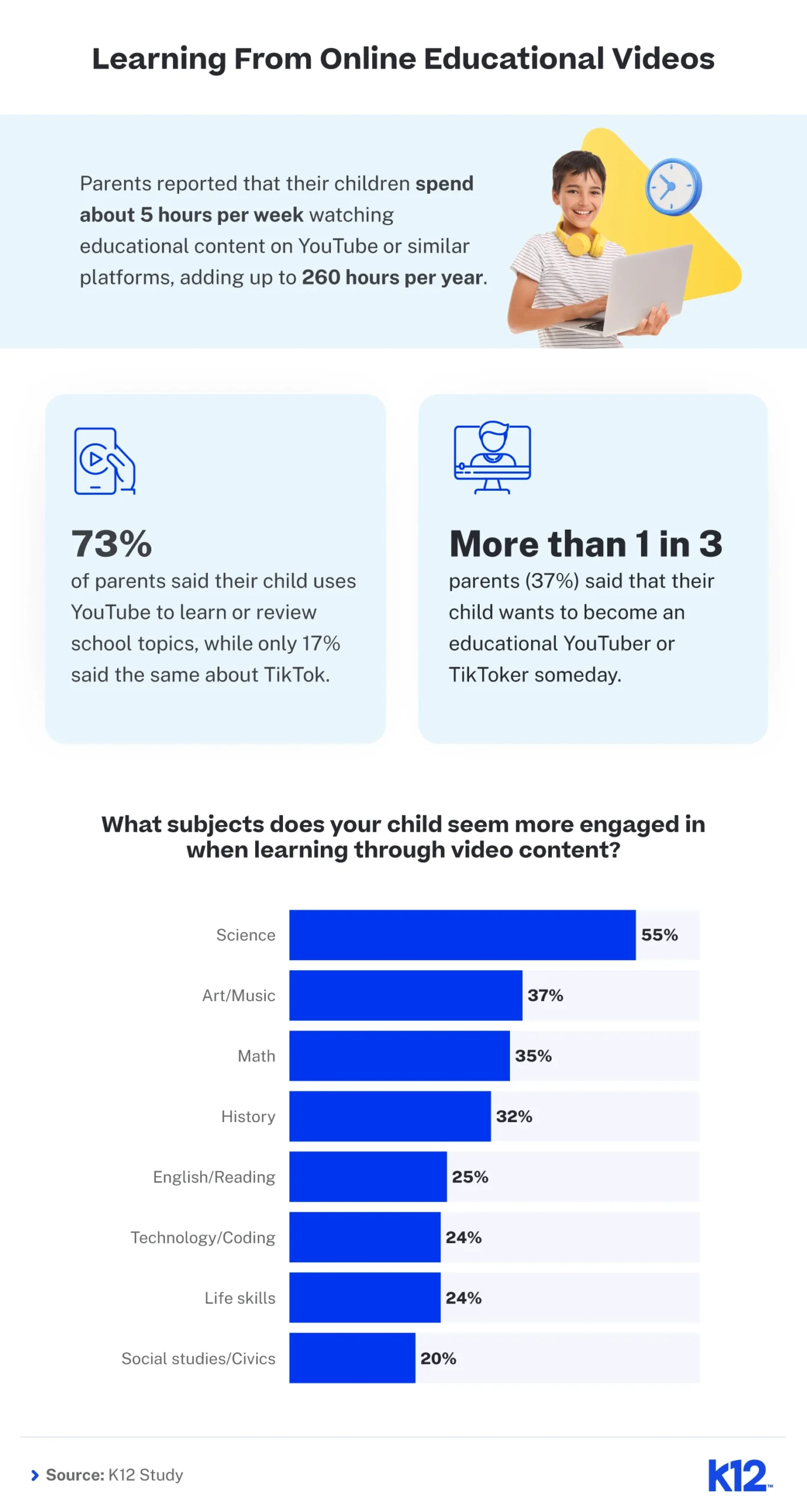
A majority of parents (73%) said their children use YouTube videos to review or learn more about academic topics. Only 17% reported that their children watch educational TikToks. On average, students spend about five hours per week watching educational videos online, which adds up to 260 hours each year.
Video-based learning is helping students feel more engaged—especially in science. More than half of parents (55%) said their kids showed greater interest in science when learning through videos. Art and music follow at 37%, with math (35%) and history (32%) close behind.
Parents are also playing an active role, with 66% saying they’ve recommended videos to help their child with homework or a difficult subject. Most parents (86%) monitor the content their child watches at least sometimes, including 41% who report they always do.
For some students, watching educational videos has sparked even bigger dreams. More than one in three parents (37%) said their child hopes to become an educational content creator someday. This new generation of online learners is growing up seeing education as something they can shape, share, and take part in themselves.
When Digital Learning Delivers Results
Parents are turning to videos to boost their children’s learning, and many say the results are hard to ignore. From higher grades to greater confidence, online educational content has become a key tool for families.
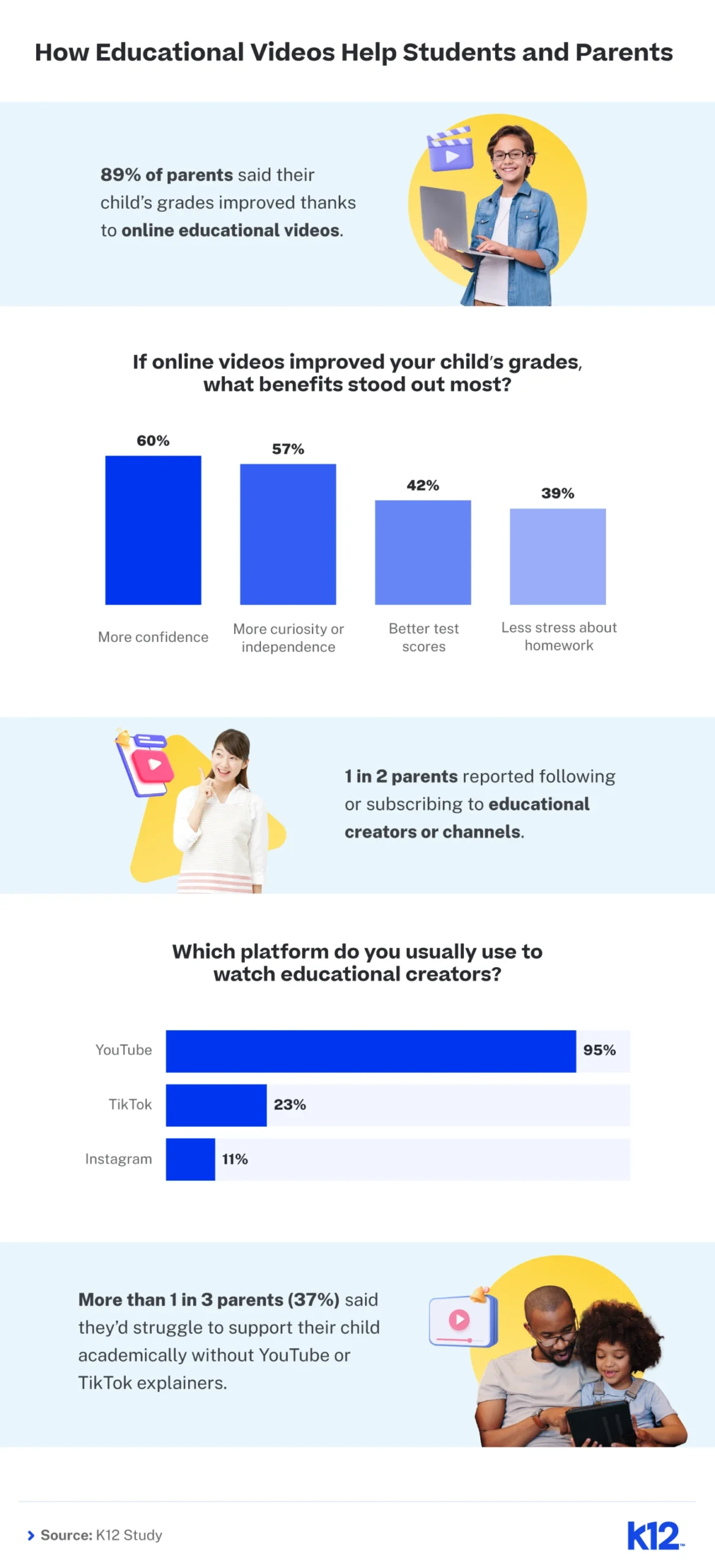
Half of parents now follow or subscribe to educational creators or channels, and 89% said their children’s grades improved after watching educational videos online. Among those parents, many noticed additional benefits:
- 60% said their child became more confident.
- 57% saw increased curiosity or independence.
- 42% reported better test scores.
- 39% said their child felt less stressed about homework.
YouTube is the go-to social media platform for parents, with 95% using it to watch educational content. Fewer parents used TikTok (23%) and Instagram (11%) for this purpose. For some families, this way of learning has become essential. More than one in three parents (37%) admit they rely on YouTube and TikTok to explain tricky school concepts to their kids.
Adapting Teaching to a Generation That Learns Online
As students spend more time learning through videos, teachers are adapting to keep lessons engaging and relevant, sometimes by using the very platforms their students already love.
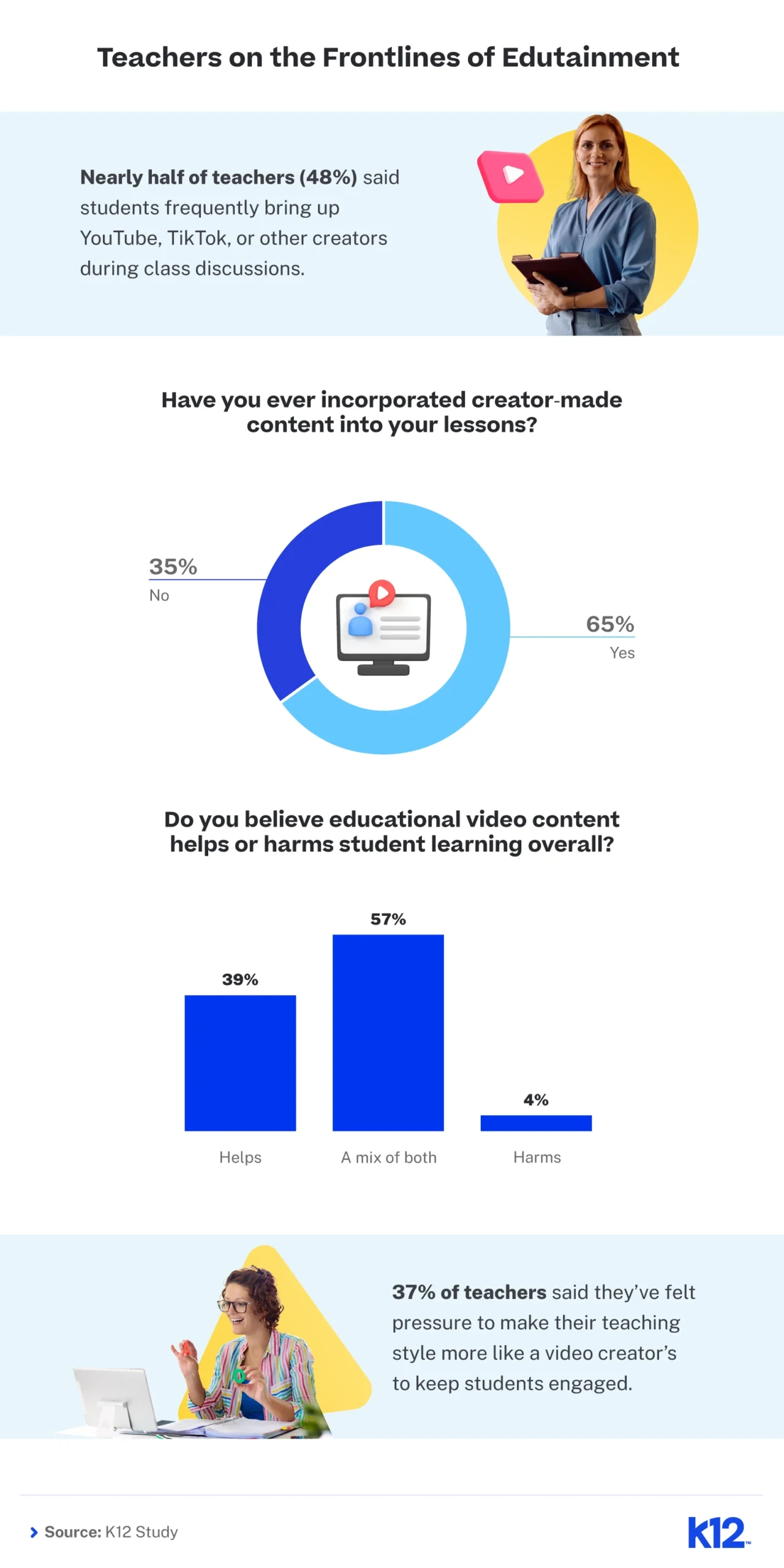
About two-thirds of teachers (65%) said they’ve incorporated creator-made content, such as YouTube or TikTok videos, into their classrooms. This was most common among middle and high school educators. Some teachers are also adjusting their delivery, with 37% reporting that they feel an overall sense of pressure to make their teaching style more like that of a content creator to keep students engaged.
This approach has benefits but also challenges. Two-thirds of teachers (67%) said they’ve had to correct or “un-teach” misinformation students picked up from online videos, and 49% said this has happened more than once. Most teachers (86%) said they review educational content their students mention at least sometimes, with 35% reporting they always do. Like parents, teachers can help students get the most out of educational videos by actively guiding them toward reliable, accurate content.
The Future of Learning at Home and Online
Educational videos are becoming a regular part of how children learn, helping them stay engaged in school subjects and grasp new concepts more easily. Many families and teachers are finding that these tools can build confidence and support better learning habits. As edutainment continues to grow, online learning options like K12 can help families pair these videos with a guided, reliable learning experience. With the right combination of digital resources and support, students can feel more prepared and excited about learning.
Methodology
A survey of 503 parents and 505 K–12 teachers not affiliated with K12 was conducted in November 2025 to examine how digital creators and platforms are influencing student learning.
Fair Use Statement
We welcome the sharing of this information for noncommercial purposes. If you use these findings, please include a link back to this page for proper attribution to K12.